
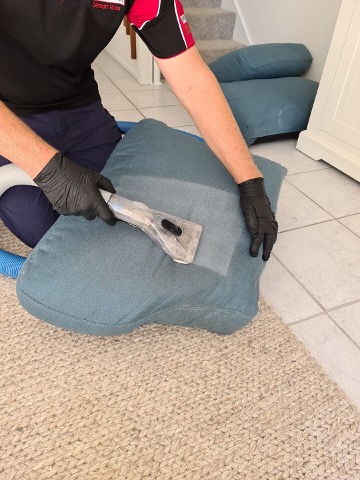
Your lounge suite, armchairs, and sofas see more daily use than almost any other surface in your home. They collect dust, skin cells, food particles, pet hair, and spilled liquids — yet they are often the last thing homeowners think about cleaning. This guide explains what professional upholstery cleaning involves, how the process works, and why it makes a genuine difference to your home environment.
What Is Upholstery Cleaning?
Upholstery cleaning refers to the professional cleaning of fabric-covered furniture: sofas, armchairs, ottomans, dining chairs, recliners, and any other piece where fabric or leather forms the seating surface. It is distinct from carpet cleaning, though the underlying principles — extracting embedded soil, allergens, and bacteria from fabric fibres — are similar.
Professional upholstery cleaning goes far beyond wiping down cushion covers or applying a supermarket fabric spray. It involves specialist equipment, fabric assessment, appropriate cleaning agents, and extraction methods tailored to the specific material being cleaned.
Why Upholstery Gets Dirtier Than You Realise
Upholstered furniture acts as a trap for everything that circulates through your living space. Dust mites colonise sofa cushions in large numbers — feeding on the dead skin cells shed by the people sitting on them. Pet dander, pollen, food residues, and body oils all accumulate in the fabric over time.
Unlike hard surfaces, which can be wiped clean, fabric fibres hold onto contaminants. Standard vacuuming removes surface debris but does not address the deeper accumulation in the pile or padding beneath. Over time, this results in:
- Dull, greyed, or flattened fabric appearance
- Persistent odours that do not improve with airing
- Increased allergen load in the room
- Fabric degradation from embedded soil particles acting as abrasives
The Professional Upholstery Cleaning Process
A professional upholstery cleaning appointment with Carpet Master follows a structured process designed to protect the fabric while delivering a thorough clean:
- Fabric assessment — fibre type, construction, and condition are inspected before any treatment begins
- Spot pre-treatment — stains and heavily soiled areas receive targeted pre-treatment solution
- Extraction cleaning — hot water extraction or low-moisture cleaning is applied based on the fabric type
- Grooming — fabric pile is brushed and aligned to promote even drying
- Final inspection — the piece is checked before the technician leaves
The entire process for a standard sofa typically takes 30 to 60 minutes, with drying time of 2 to 4 hours depending on the fabric and ventilation.
Which Fabrics Can Be Professionally Cleaned?
Most upholstered furniture can be professionally cleaned, but the method must match the material. Common upholstery fabrics in Australian homes and how they are treated:
- Polyester and microfibre — highly durable, responds well to hot water extraction
- Cotton and linen blends — can be cleaned but require careful moisture management to avoid shrinkage
- Wool upholstery — needs low-moisture methods to avoid fibre damage
- Velvet and chenille — delicate pile fabrics requiring specialised gentle cleaning
- Leather — requires specific leather cleaning and conditioning products, not fabric solutions
Always check the manufacturer’s cleaning code on your furniture before applying any cleaning product. A professional will assess this as part of their pre-clean inspection.
The Difference Between Professional and DIY Upholstery Cleaning
Many homeowners attempt upholstery cleaning with hire machines or supermarket products. The results are rarely comparable to professional cleaning for two reasons: equipment power and product formulation. Professional extraction equipment removes far more moisture and loosened soil than consumer-grade alternatives, which means faster drying, no sticky residue, and lower risk of over-wetting.
Over-wetting upholstery is a particular hazard — it can cause mould in the padding, shrinkage in natural fibres, and colour bleeding or watermarking on delicate fabrics. A professional with the right assessment and equipment eliminates these risks.
How Often Should Upholstery Be Professionally Cleaned?
For most Australian households, a professional upholstery clean every 12 to 18 months is sufficient. Households with pets, young children, or allergy sufferers benefit from more frequent cleaning — every 6 to 12 months. Regular vacuuming between professional cleans helps manage surface soiling and extends the time between appointments.
Book a Professional Upholstery Clean Today
Carpet Master brings the same fabric expertise and professional-grade equipment to upholstery cleaning that has made us a trusted name in curtain and carpet care across Australia.
To book a professional upholstery clean or find out more, visit carpetmaster.com.au and speak with a specialist today.