
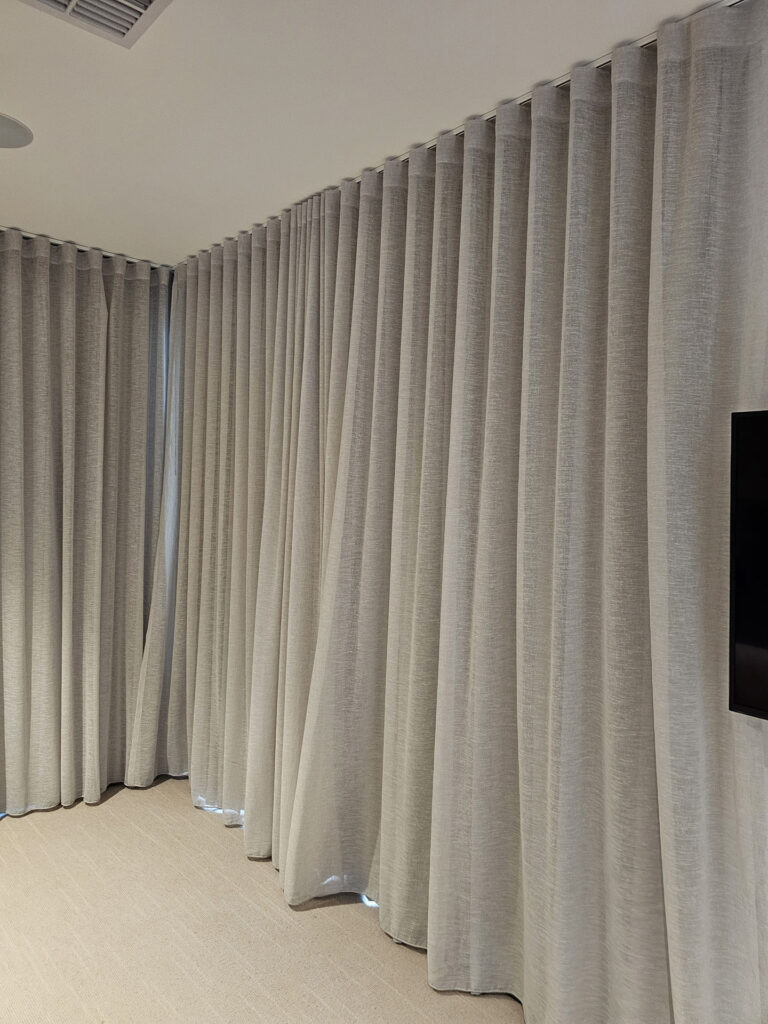
Smoke is a silent destroyer of curtains. Whether it comes from cigarettes, an open fireplace, candles, incense or a kitchen mishap, smoke deposits a fine, sticky, tar-like residue that settles into fabric and turns it yellow-brown. It also carries a stubborn odour that re-emerges every time the room warms up. Curtains, hanging high where warm smoky air collects, take the brunt of it.
Smoke and nicotine staining is one of the hardest jobs in fabric care, and one where professional curtain cleaning genuinely outperforms any home attempt. Here is what is involved.
What Smoke Actually Leaves on Your Curtains
Smoke is a suspension of microscopic particles and oily tars. As warm smoky air rises and cools against windows and curtains, those particles condense onto the fabric as a sticky, acidic film. Nicotine from cigarette smoke is especially notorious — it oxidises to a yellow-brown stain and carries an odour that clings for years.
Because the residue is both oily and acidic, it bonds tightly to fibres and keeps releasing smell. This is why a smoke-affected room can be aired for weeks and still smell the moment the heating goes on — the curtains are quietly re-emitting it.
Why Smoke Staining Resists Ordinary Cleaning
Tar and nicotine are not water-soluble, so a plain wash barely touches them. Worse, mishandling can spread the brown residue into a wider blotch.
- The oily tar film repels plain water and detergent.
- Nicotine yellowing is set deeper by heat from a hot wash or dryer.
- Scrubbing smears the residue into a larger, streaky stain.
- Home washing removes the surface smell briefly but leaves the embedded odour behind.
The Odour Problem That Won’t Quit
The staining is visible, but for many people the smell is the bigger issue — and it is the part most home cleaning fails to fix.
- Smoke odour is held in the oily residue deep in the fibre.
- It re-emerges with warmth and humidity long after the room is aired.
- Air fresheners mask it temporarily but the source remains in the fabric.
- Only breaking down and removing the residue removes the smell properly.
How Carpetmaster Tackles Smoke and Nicotine
Smoke residue needs a cleaning approach that can dissolve oily, acidic tar and lift it out of the fibre. After assessing the fabric and the severity of the staining, we pre-treat with solutions formulated to break down the tar and neutralise the residue, then clean the whole curtain to even out colour and remove the embedded odour.
Heavy nicotine staining is some of the most demanding work we do, and we are realistic about it: severe, long-term yellowing may lighten substantially rather than vanish completely, depending on the fabric. We will always tell you what to expect before we start.
Fire and Soot Damage Is a Special Case
Curtains caught up in a kitchen fire, a candle accident or smoke from a nearby blaze need careful, prompt handling. Soot is fine and easily smeared, so the worst thing you can do is rub it. Leave soot-affected curtains undisturbed, avoid touching the marks, and arrange a professional clean quickly — the longer acidic soot sits, the more it sets and the harder it is to recover the fabric.
Reducing Smoke Build-Up on Curtains
If smoke is a regular part of your home — a fireplace, candles or smoking indoors — a few steps slow the damage.
- Ventilate well while and after burning candles, fires or cigarettes.
- Keep curtains away from open flames and fireplaces.
- Vacuum curtains regularly to remove loose particulate before it sets.
- Have smoke-exposed curtains professionally cleaned more often — every 6 to 12 months.
Cleaning Curtains After Buying a Smoker’s Home
One of the most common smoke jobs we see is a new owner moving into a home where the previous occupants smoked indoors for years. The curtains are often deeply yellowed and carry an odour that the airing and repainting did not fix — because the soft furnishings are still holding the residue. Replacing every curtain is expensive, so a specialist clean is usually the first thing worth trying.
Results vary with how long and how heavily the home was smoked in, but a professional clean frequently lifts years of nicotine staining and odour dramatically, turning curtains people assumed were ruined back into usable, fresh window treatments.
Why Severity and Timing Change the Outcome
With smoke and nicotine, two factors drive the result: how heavy the staining is, and how long it has been setting. Light, recent smoke exposure usually cleans up beautifully. Decades of dense cigarette tar may lighten substantially rather than disappear entirely, depending on the fabric and its condition.
We always assess and set honest expectations before starting, so you can make an informed decision about whether to clean or replace — rather than paying for a result the fabric cannot give.
Smoke Damage From Bushfires and Nearby Fires
Not all smoke damage comes from inside the home. Australian households are increasingly exposed to bushfire smoke, and curtains near open windows can absorb a surprising amount of smoke odour and fine ash during a smoke event. Unlike a quick airing, that residue settles into the weave and lingers.
Curtains affected by external smoke are usually very recoverable, because the exposure is short compared with years of indoor smoking. A prompt professional clean removes the absorbed odour and particulate before it has a chance to set, returning the fabric to fresh — and clearing one of the more stubborn reminders of a smoky season.
Why Smoke Odour Returns When the Heating Comes On
A common and frustrating experience is a smoke-affected room that smells fine in mild weather and strongly of stale smoke the moment the heater or air conditioner runs. The explanation is simple: warmth and air movement re-release the oily smoke residue still held in soft furnishings, including the curtains.
This is exactly why surface air-freshening never solves a smoke problem — the source is embedded in the fabric. Removing the residue itself, through proper cleaning, is the only way to stop the odour returning each time the room warms up.
Book Your Professional Curtain Clean
Smoke and nicotine leave a sticky, smelly residue that ordinary washing cannot shift. For specialist treatment that lifts the staining and removes the embedded odour, rely on the experienced team at carpetmaster.com.au. With more than 20 years of specialist fabric-care experience, every job starts with a fabric assessment, and your curtains are gently hand washed right where they hang — cleaned in your home without being taken down.