
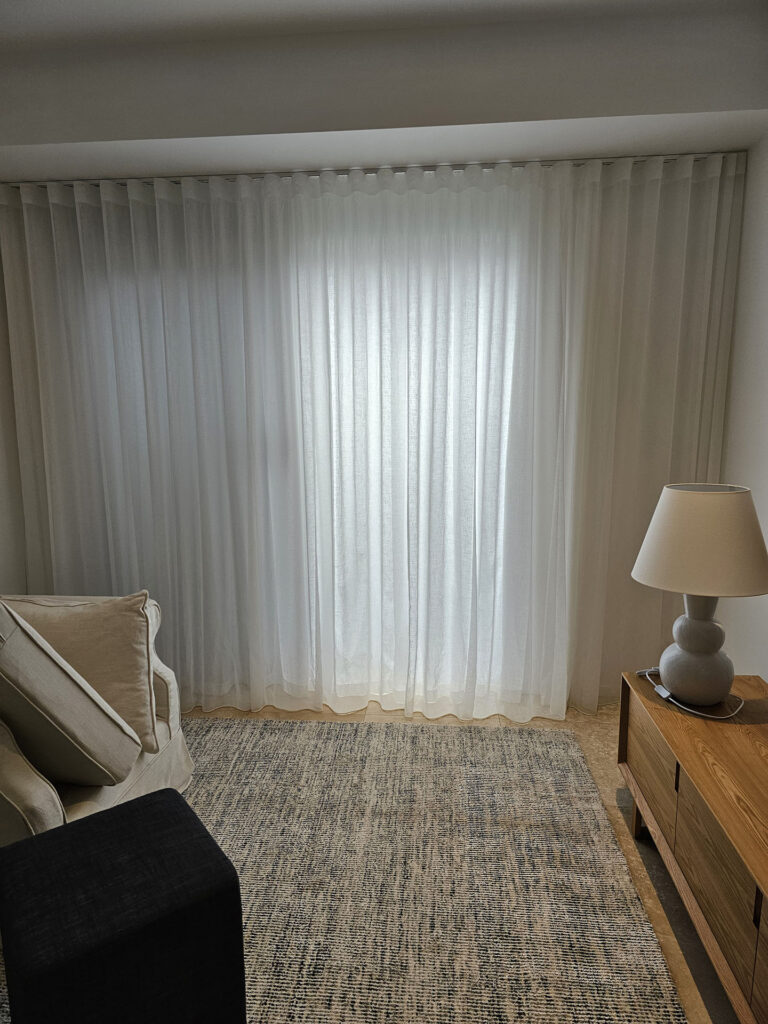
Living near the coast is one of life’s pleasures, but it is hard on curtains. Salt-laden sea air, intense reflected sunlight and hard or mineral-rich water combine to leave window treatments crusted, stiff, faded and marked in ways inland homes never see. The open windows that let in the sea breeze also let in everything the breeze carries.
Coastal curtain care is its own discipline, and right around the Australian coastline it is some of the most common work we do. Here is how to keep curtains looking good in a salt-and-sun environment.
What the Coastal Environment Does to Curtains
Sea air carries fine salt particles that drift in through open windows and settle on curtains. Salt is hygroscopic — it draws moisture out of the air — so salty curtains stay slightly damp, feel stiff or crusty, and become a magnet for mould. Add the relentless, reflected UV off water and sand, and curtains in coastal homes face a combined assault that fades, stiffens and weakens the fabric.
Hard or bore water, common in many coastal and regional areas, adds mineral deposits to the mix — the chalky marks and tide lines left when mineral-rich water dries in or on the fabric.
Salt Build-Up: Stiff, Crusty Curtains
Salt accumulation is the signature coastal problem, and it does more than make curtains feel rough.
- Curtains feel stiff, crusty or slightly damp to the touch.
- Trapped salt keeps fabric moist and encourages mould and mildew.
- Salt crystals abrade fibres from within, accelerating wear.
- A plain home wash often just redistributes the salt rather than removing it.
Hard-Water and Mineral Marks
Hard water leaves its own distinctive marks, whether from a leak, condensation or a previous wash in mineral-rich water.
- Chalky white or cloudy deposits where hard water has dried.
- Tide lines and rings from condensation running down the panel.
- A dull, slightly crusty feel across affected areas.
- Marks that ordinary detergent cannot dissolve without the right treatment.
The Sun-Damage Factor
Coastal UV is intense and unforgiving. Reflected light off water and sand magnifies the effect, fading colour and breaking down fibres faster than inland homes experience. Cleaning cannot reverse UV fading or rebuild a sun-rotted fibre, so part of coastal curtain care is honest assessment.
We always check fibre strength before cleaning, because a sun-weakened curtain can tear during any process. We will tell you if a panel is too far gone — and lining curtains or using sheers as a UV buffer is the best way to slow sun damage on exposed coastal windows.
How Carpetmaster Cleans Coastal Curtains
Coastal curtains need a clean that genuinely removes salt and mineral deposits rather than spreading them, while respecting fabric that may already be stressed by sun and damp. After assessing the fabric and its condition, we use controlled cleaning that flushes salt and minerals out of the weave and treats any mould the damp salt has encouraged.
Because so many coastal curtains are large and sun-fragile, on-location cleaning is often ideal — the curtains never have to be taken down and handled while weakened. The result is fabric that feels soft again, smells fresh and is free of the crusty salt film.
Protecting Curtains in a Coastal Home
You cannot change the climate, but you can manage its effect on your curtains.
- Air or vacuum curtains regularly to remove settling salt before it builds up.
- Line or shade west- and water-facing windows to cut UV exposure.
- Ventilate to stop salt-dampened fabric staying wet and growing mould.
- Have coastal curtains professionally cleaned every 6 to 12 months to clear salt and minerals.
Why Coastal Curtains Need More Frequent Cleaning
Inland, a curtain might comfortably go a year or two between professional cleans. On the coast, the constant deposit of salt and the accelerated soiling from open, breezy windows mean curtains reach the same level of soiling far sooner. Most coastal homes benefit from cleaning every six to twelve months, simply because the environment loads the fabric faster.
There is a preservation argument too: salt left in the weave keeps fabric damp and abrades the fibres from within, so regular removal of salt actually extends the life of the curtains rather than just improving how they look.
Protecting the Curtains in a Coastal Holiday Home
Holiday homes and coastal rentals face a particular challenge: they are often closed up for weeks at a time with the salt and humidity doing their quiet work and no one there to ventilate. Curtains in these properties commonly develop musty odours, salt stiffness and mould between visits.
A scheduled professional clean between seasons keeps these curtains fresh for guests and stops small problems — early mould, salt build-up — from becoming the kind of damage that forces a full replacement. It is far cheaper to maintain coastal curtains than to keep buying new ones.
Why Open-Window Living Comes at a Cost for Curtains
The coastal lifestyle is built around open windows and sea breezes, and that is exactly what loads curtains with salt and airborne soil. Every breeze that cools the house also carries fine salt and grit onto the nearest fabric. It is a fair trade for the lifestyle, but it does mean coastal curtains work harder and soil faster than their inland equivalents.
Understanding that helps set realistic expectations. Coastal curtains are not failing when they stiffen and dull more quickly — they are simply doing their job in a tougher environment, and they reward a more regular cleaning rhythm because of it.
Salt, Mould and the Coastal Double Trouble
The real danger of coastal conditions is the way salt and mould reinforce each other. Salt draws and holds moisture from the humid sea air, keeping the fabric perpetually slightly damp, and that lingering dampness is exactly what mould needs to colonise the weave. Tackle one and ignore the other and the problem returns.
An effective coastal clean addresses both at once: flushing the salt and minerals out of the fabric so it can finally dry properly, and treating any mould the dampness has already encouraged. Breaking that salt-and-mould cycle is the key to keeping coastal curtains fresh rather than fighting a losing battle against the climate.
Book Your Professional Curtain Clean
Salt, hard water and coastal sun put curtains under constant pressure — and need a clean that removes the deposits rather than spreading them. To refresh stiff, marked or musty coastal curtains, contact the local specialists at carpetmaster.com.au. With more than 20 years of specialist fabric-care experience, every job starts with a fabric assessment, and your curtains are gently hand washed right where they hang — cleaned in your home without being taken down.